Breaking · UK News Post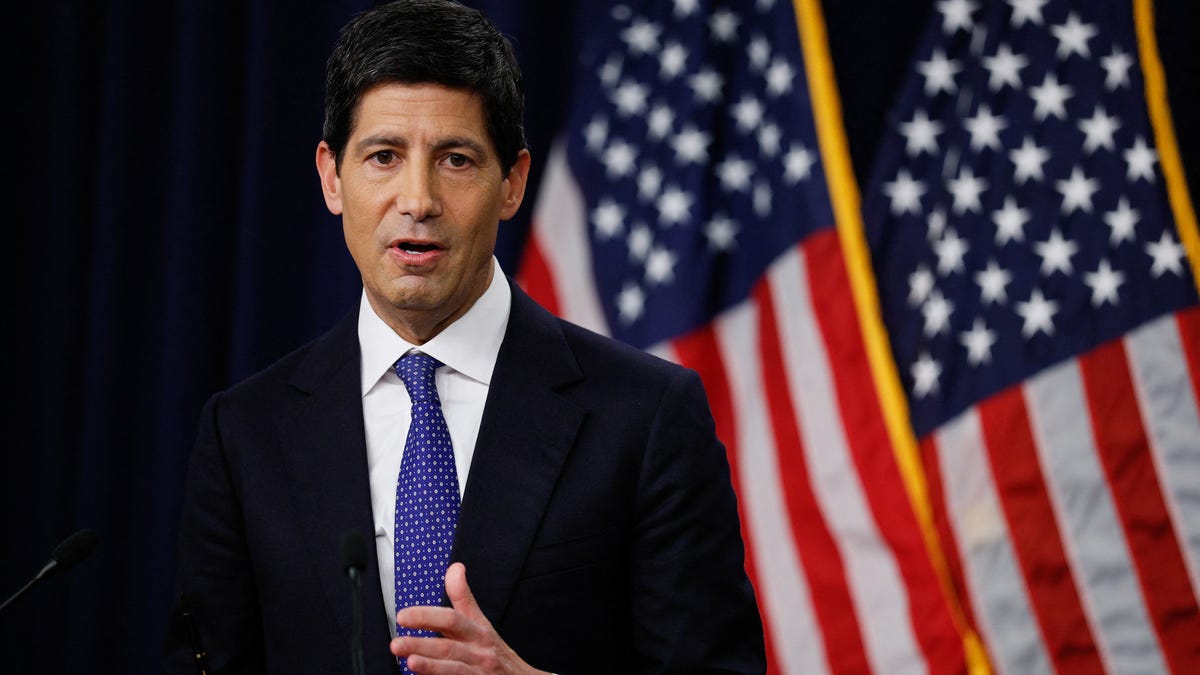
Show Caption Federal Reserve policymakers’ decision to raise the benchmark for short-term interest rates is about to impact Americans’ budgets. The federal funds rate stands at a range of 3.75% to 4%, a quarter percentage point higher than before. Fed Chair Kevin Warsh explained that the decision was made in response to the United States’ stubborn inflation .
The hope behind raising the range is that borrowing becomes more expensive, which can limit demand, and eventually brings down prices for Americans struggling with the cost of living . But the Fed can’t control everything. It has little influence over tariffs , war in the Middle East , and the AI buildout that are all contributing to the rise in prices consumers are experiencing.
As a result of the move, borrowers can expect to see higher rates on their credit cards and other forms of variable-rate debt at a time when more rely on loaned money to make ends meet. Savers, on the other hand, are likely to benefit from higher returns on their high-yield savings accounts and certificates of deposit. The impact of the hike, the Fed’s first in three years , depends largely on who you are, according to Katie Klingensmith, Edelman Financial Engines’ chief investment strategist.
“A rate increase does not affect everyone the same way, which helps explain why the economy can look strong in some areas while feeling painful in others, creating a ‘split-screen reality,'” Klingensmith told USA TODAY. “That is why a rate hike should not be viewed as simply good or bad. The impact depends on where someone sits in the economy: borrower or lender, spender or saver, heavily indebted or financially secure.” Who will be impacted most?
Simeon Wallis, chief investment officer and partner at Aprio Wealth Management, said Americans today can generally be divided into two groups: stretched consumers and secure consumers. The latter are typically less affected by changes in the federal funds rate, he said. “Stretched consumers typically are early and mid-stage in their careers.
They likely are in jobs that are paying somewhere around the median income or less, and they often will have more floating rate debt,” Wallis said. “That secure consumer is likely mid- to late career or retired, maybe early years of retirement. They’re sitting on assets.
They likely have a home that has a fixed rate mortgage at a low rate. They’re much less impacted.” In other words, those most impacted by the Fed’s Sept. 16 rate hike are likely those who can afford it the least, according to Matt Schulz, LendingTree’s chief consumer finance analyst. “If you’re somebody who has a bunch of credit card debt and no savings, then you get all the downside and none of the upside,” Schulz said.
How does a Fed rate hike affect credit cards? A rise in the federal funds rate most directly affects credit card interest rates. While many consumers could see their variable credit-card APRs rise by a quarter percentage point within one to two billing cycles, the dollar impact depends on how much debt they carry.
For example, a consumer who maintains an unpaid $100 balance for a full year may pay about 25 cents more in interest annually, while someone carrying a $10,000 balance could pay about $25 more. Schulz said the good news is that a quarter-point hike isn’t “going to rock anybody’s world financially.” “Chances are, we’re talking about an extra dollar or two a month when it comes to the typical credit card bill, but when you’re struggling with debt, when the prices of seemingly everything are rising, every dollar counts,” Schulz said. The risk is that when the Fed raises its target range for interest rates, they typically don’t only do it once.
On Sept. 16, a majority of members on the rate-setting committee projected at least one more quarter-point increase before the end of the year. “The impact gets bigger with every subsequent increase, and the more that we see, the more it adds up,” he said. “If you’re talking about three or four increases, and a full point over the course of a few months, then that can be pretty significant.” How does a Fed rate hike affect car loans?
Because most auto loans come with a fixed rate, a rise in the federal funds rate won’t necessarily lead to higher interest payments for people who are already paying off a car. But it will impact consumers in the market for a new vehicle. With members of the rate-setting committee signaling that they expect rates to move higher, Wallis said they should probably look to buy sooner rather than later.
Either way, it’s likely "that new loan will be more expensive than your friend’s that got a car a month ago,” said Rodney Williams, SoLo Funds’ co-founder and president. Williams added that when consumers face higher interest rates at a dealership, they often ask for a longer-term loan to bring down their monthly payment. “What most Americans don’t know is that when you extend the time of the loan, despite your monthly payments being cheaper, you’re also extending the time period or the time horizon that you’re being charged interest,” Williams said.
“You’re going to be paying more for that car with a 72-month loan than you would a 60-month loan.” What does a Fed rate hike mean for savers? A Fed rate hike typically means higher returns on things like their high-yield savings accounts and certificates of deposit. “Households with cash, CDs, or high-quality bonds can earn more income,” Klingensmith said.
“For people living on savings or fixed income, higher rates can be a positive.” Those with high-yield savings accounts can expect their yields to improve over the next couple of months, Schulz said. Those higher rates will apply to consumers’ existing savings balances, not just the money they deposit after Sept. 16. He added that banks and financial institutions aren’t typically in as much of a rush to raise them as they are to increase credit card APRs.
“Savings accounts yields take the stairs up and the elevator down,” Schulz said. “But even if it moves slowly, any increase that we see in savings yields is definitely welcome because it can help give people a little bit more financial wiggle room with their emergency fund or other savings goals during a time when they can really use it.” What should consumers do now? After the Fed rate hike, Schulz said there are two things consumers can do to put themselves in a better financial position.
First, try to see if your lender will lower your interest rate. Second, open a high-yield savings account. While asking your lender for a lower interest rate may seem like a fanciful idea, in a Lending Tree survey of 2,000 U.S. consumers earlier this year, 84% of cardholders who asked for a lower APR received one.
To get in on the expected higher savings yields, consumers can open a high-yield savings account . Compare rates from online banks or credit unions and apply online. Although certain requirements must be met, the “best” high-yield savings account right now offers an annual percentage yield of 4.21% – 11 times higher than the 0.38% national average, according to NerdWallet .
“People do have more power over their interest rates than they think they do,” Schulz said. “You can use that power by shopping around for the best rates on a loan or the best rates on a high-yield savings account.” He added that Americans may also consider refinancing debt with a 0% balance transfer credit card or a low-interest personal loan. However, Williams reminds borrowers to be vigilant.
“You got to make sure if you’re going to refinance or if you're going to do a balance transfer, you’re doing it in a scenario that is in your favor,” Williams said. “With the Fed rate increase, you may be balance transferring to something that’s even higher.” The best way to avoid paying a higher APR on your credit card? Pay off debt.
If that’s not an option, at least make your minimum monthly payment on time, he said. “Things change when you are late. Things compound differently,” Williams said.
“As you think about all the debt that you have, you should prioritize the one that’s most costly or the one that’s most variable and do your best to try to pay it down.” Reach Rachel Barber at rbarber@usatoday.com , follow her on X @rachelbarber_ , and subscribe to her newsletter "Making More of Your Money" here . Facebook Twitter Email
Source: USA Today